Table of contents
Why does Málaga Airport need Expansion?How Much is Going to be Invested?What Will Change at Málaga Airport?Bigger Passport Control and Arrivals areaWhat about the Runways?When will Construction Start?Why is Málaga Airport so important to the Costa del Sol?What could the Expansion mean for the Costa del Sol Property Market?Conclusionlooking to buy a home?
Submit this Form and Benefit from our 25 Years' Experience & Strong Local Network.Málaga-Costa del Sol Airport is set for its biggest transformation in more than a decade. With passenger numbers continuing to grow, the Spanish government has approved an investment of around €830 million for Málaga Airport between 2027 and 2031 as part of the new DORA III airport investment programme.
The investment is part of a much larger plan. Aena, which operates Málaga Airport, has previously outlined a wider expansion and refurbishment programme worth around €1.5 billion. The project will increase terminal space, improve passenger facilities, add capacity for international flights, and upgrade the airport’s infrastructure.
The airport is the region’s main international gateway, serving millions of visitors, residents, property owners, and businesses every year.
So, what exactly is planned, when will the work start, and what could the expansion mean for the Costa del Sol?
Why does Málaga Airport need Expansion?
The simple answer is that passenger numbers have grown much faster than expected. Málaga-Costa del Sol Airport handled a record 26.76 million passengers in 2025, up 7.4% from 2024. International passengers accounted for more than 22.2 million of the total, highlighting the importance of tourism to Málaga.
The growth continued in 2026. During the first eight months of the year, more than 19.3 million passengers passed through the airport, up 6.6% from the same period in 2025. These figures help explain why expansion has become a priority as demand is expected to continue rising with Málaga and the Costa del Sol attracting more tourists, international residents, businesses and property buyers.
The Spanish government approved the new DORA 2027-2031 programme in September 2026 to add airport capacity and improve infrastructure across Aena’s network.
How Much is Going to be Invested?
There are two figures worth knowing because they refer to different parts of the project. The latest figure is around €830 million for Málaga Airport under the DORA 2027-2031 investment programme. This covers investment planned during the five-year regulatory period beginning in 2027.
However, the wider Málaga Airport expansion programme is expected to involve around €1.5 billion in total investment. Aena announced this larger figure when it formally began the process of developing the expansion project in 2025.
In other words, the €830 million figure should not be seen as the total cost of everything planned for the airport. It is the investment allocated within the 2027-2031 programme, while the wider project extends beyond this period.
The official DORA documents also include a substantial investment for the expansion of the terminal area, with some of the work continuing beyond 2031.
This long-term approach is important because the airport will remain operational while the works take place. Aena therefore has to phase the work carefully so that flights can continue throughout the construction period.
What Will Change at Málaga Airport?
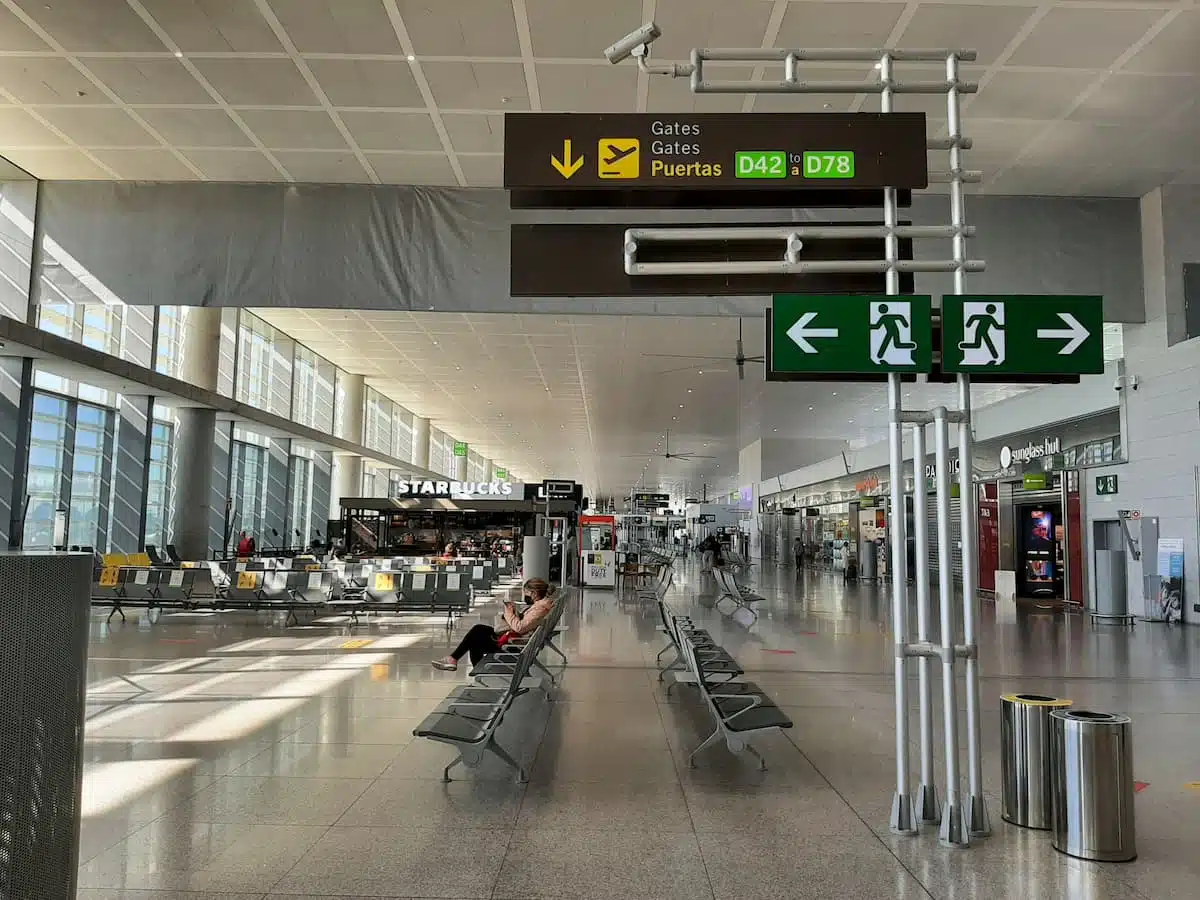
One of the biggest changes will be the expansion of the terminal area. Aena plans to increase the current terminal area from around 80,000 square metres to approximately 140,000 square metres. This would almost double the amount of space available to passengers and airlines.
The project will also involve major changes to the existing layout. The proposed configuration includes demolishing the former Terminal 1 and the current B and C piers.
A new pier will be built to handle non-Schengen traffic, with a centralised border control area. This is particularly relevant to Málaga because the airport has a large international passenger base, including travellers from the UK and other countries outside the Schengen Area.
The expansion will also provide more contact stands, allowing more aircraft to be connected directly to the terminal rather than relying on remote boarding arrangements.
Other planned improvements include:
- More space for security controls
- A redesigned baggage handling system
- More facilities for arriving passengers
- Additional space for airlines and airport services
- Better handling of international and non-Schengen traffic
The aim is not simply to make the terminal bigger. Aena says the project is designed to improve the entire passenger journey, from arrival at the airport through security and baggage handling to boarding.
Bigger Passport Control and Arrivals area
Some of the most noticeable changes for international passengers are expected to be around passport control and arrivals.
According to recent information, the expansion plans include multiplying the space dedicated to passport control by around six times. Security screening capacity is also expected to double, while the arrivals area will be approximately three times larger. These improvements should help ease pressure during the busiest periods of the year.
Summer is particularly demanding for Málaga Airport. The Costa del Sol attracts millions of visitors between spring and autumn, while the region also has a large population of international residents who use Málaga as their main airport.
More space at passport control and baggage reclaim could therefore be just as important as additional aircraft stands.
What about the Runways?
The expansion is not limited to the terminal. One of the planned improvements is a second taxiway arrangement that would allow aircraft to cross between the airport’s runways more efficiently. This is important because adding terminal space alone would not solve every potential capacity issue.
An airport needs the terminal, gates, baggage systems, security areas, taxiways and other infrastructure to work together. Increasing capacity on one side without improving the others could simply move the bottleneck somewhere else.
When will Construction Start?
The project has been progressing through its planning stages for several years. In July 2025, Aena approved the tender for technical assistance to prepare the expansion project. The contract, worth more than €36.5 million, was an important step towards the eventual construction programme.
In May 2026, the consortium of Cemosa, Fairbanks Arquitectos and Sener was selected to provide technical assistance for the project. The latest information from September 2026 indicates that construction is expected to begin in 2029. The works are expected to take several years, with recent estimates putting the construction period at around seven years.
This means the transformation will be gradual rather than something passengers will see completed in the next year or two. The timing also makes sense from an operational point of view. Aena has to maintain airport operations while carrying out major demolition, construction and systems work.
Why is Málaga Airport so important to the Costa del Sol?
The airport is much more than a transport hub for Málaga city. It serves the entire Costa del Sol, from Torremolinos and Fuengirola through to Marbella, Estepona and the western Costa del Sol. It is also an important gateway for inland areas of Málaga province.
For international residents, easy access to an airport with a large number of direct flights is one of the practical advantages of living on the Costa del Sol.
The 2025 figures show just how international the airport has become. The UK was the largest foreign market, with more than 6.1 million passengers travelling to and from British destinations during the year. Germany, the Netherlands, Italy and France were also among the largest international markets.
The airport also continues to add and strengthen connections with other markets. For people who live in the region but regularly travel abroad, this connectivity is an important part of everyday life.
What could the Expansion mean for the Costa del Sol Property Market?
The airport expansion is not a property development project, so it would be wrong to suggest that it will automatically increase property prices. However, better infrastructure can contribute to the long-term attractiveness of a region.
The Costa del Sol property market has become increasingly popular among buyers from the UK, northern Europe, the Middle East, North America and other parts of the world.
For these buyers, accessibility matters. A buyer considering a second home in Marbella, for example, may look not only at the property itself but also at how easily they can reach the area from their home country. The same applies to international residents who expect family and friends to visit regularly.
A larger and more efficient Málaga Airport could therefore support the Costa del Sol’s position as an international destination over the long term. It could also be relevant to businesses relocating to Málaga and the wider province. The city’s technology and business sectors have expanded considerably, while Málaga has become increasingly connected to international markets.
Conclusion
Málaga Airport’s expansion is a long-term project rather than a quick upgrade. The €830 million investment confirmed under DORA III provides a significant funding commitment for the 2027-2031 period, while the wider programme is expected to involve around €1.5 billion.
The plans include almost doubling the terminal area, a new non-Schengen pier, more contact stands, larger security and passport control areas, improved baggage handling and changes to the airport’s airside infrastructure.
With construction currently expected to begin in 2029, the full transformation will take time.
But once completed, the project should give Málaga Airport substantially more space and capacity to handle growing travellers and property buyers in Costa del Sol.